

Zack Frank thinks that a lot of the country’s best places still remain unknown to most Americans. In his opinion, these landscapes are so remarkable that they deserve to be national parks—in fact, people often have tried to make them so, without success.
That's why on Oct. 7 Frank released a documentary, "Undiscovered America: 53 Landscapes that Should Be National Parks." The two-hour-plus documentary premiered, free to watch, on YouTube. A companion coffee table book goes on sale on Etsy on Black Friday, Nov. 27.
As part of his reporting, Frank, a 43-year-old former Forest Service public affairs officer, crisscrossed the country with his wife on a frenetic, 18,000-mile road trip funded by a 2014 Kickstarter campaign that raised more than $22,000. In just two and a half months, they explored all 53 locations, though he returned to some places more than once.
It took nearly a decade for the project to come to fruition. Frank shot the entire film himself. The film’s handsome cinematography reflects his experience: He trained as a photojournalist in the Marines, and worked creating and producing videos for the National Park Service and the Smithsonian Institution.
"Undiscovered America" urges the viewer to celebrate public lands beyond the marquee Yosemites and Yellowstones. It also calls to push for more protection of the lesser-known wonders. America isn't finished protecting lands as national parks, Frank told RE:PUBLIC in a recent interview. Every administration since William McKinley—125 years ago—has signed off on the creation of a park or national monument.
Many of the film’s 53 locations may be unknown to viewers who don’t live near them: the Painted Hills of Oregon. The Channeled Scablands of Washington State. Coal Canyon in northern Arizona. Others are more famous: Big Sur, California. Sedona, Arizona. The White Mountains of New Hampshire. One of his criteria, Frank said, was, “What places would have become national parks if we started from scratch?” The common denominator, he believes, is that these places are special and worthy of more protection than they currently have.
Of course, at a time when the park service's maintenance backlog stands at $24 billion, national park designation can be a double-edged sword. On balance, Frank thinks designation is a good thing. For instance, designating areas of the Mojave Desert and the Carrizo Plain National Monument in California, he argues, could relieve pressure from other overcrowded western parks.
Despite the optimism of the film, Frank is a realist. He doesn’t think the locations in “Undiscovered America” will become parks next week. (That said, a few days after the interview, one of the places in the documentary, Chiricahua National Monument in southeast Arizona, became the country’s 64th national park.) Instead, he wants his film “to set a vision for the next 100 years.” He wants people to talk about the list—even argue about it around the campfire.
“There are still places out there that are truly impressive and worth preserving for future generations, before the hand of man destroys them for temporary justifications,” Frank said. “That chance to create something that endures and benefits everyone is what drives me to try to highlight and protect these places.”
Frank spoke with RE:PUBLIC about five landscapes that almost became national parks —and why each effort failed.
Zack Frank
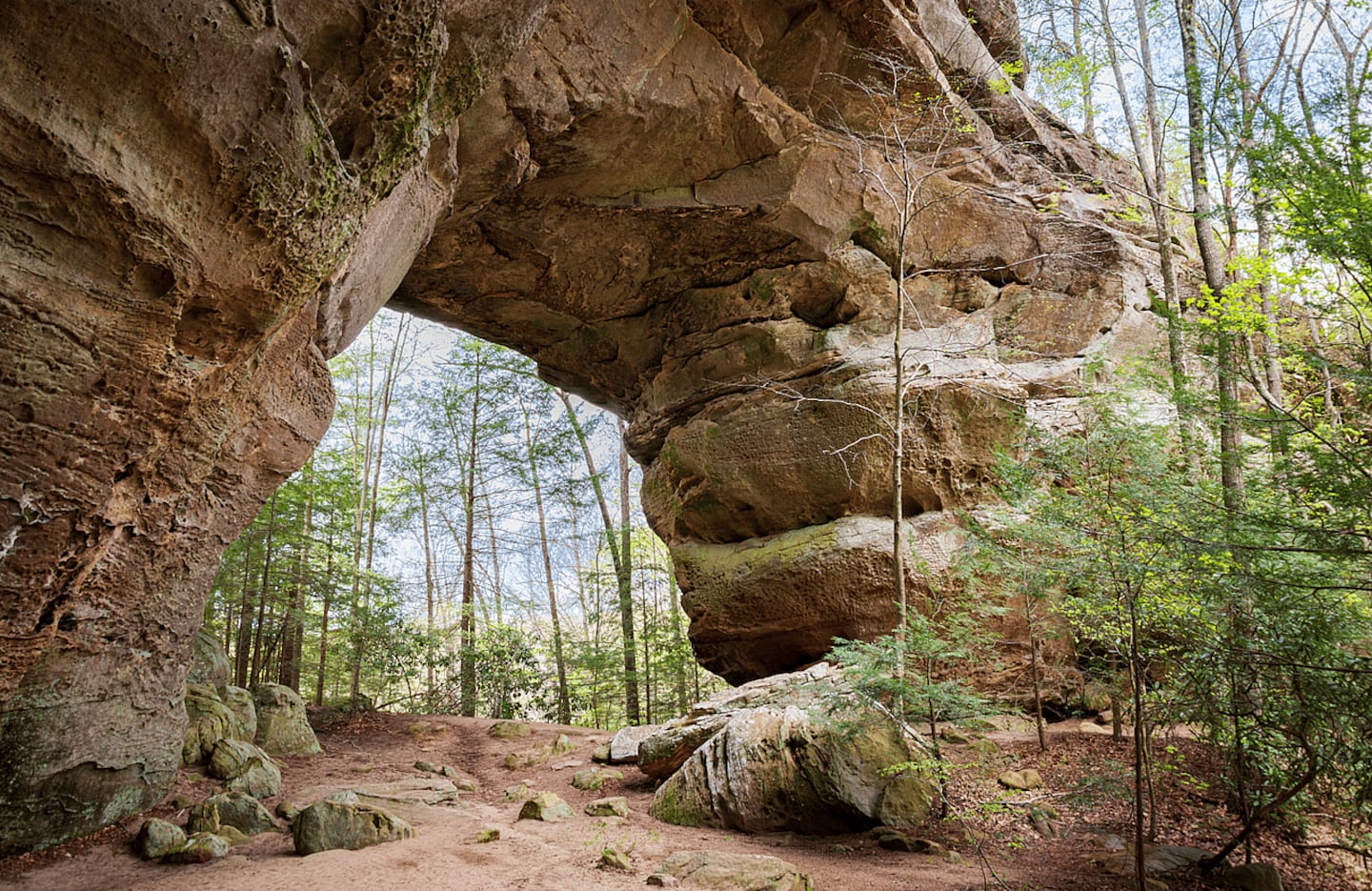
The Cumberland Plateau, Kentucky and Tennessee
Extending through eastern Kentucky and Tennessee, the land rises 1,000 feet above the Tennessee Valley. This is the Cumberland Plateau, home to the highest concentration of natural stone arches east of the Mississippi, and the second most in the country after Utah. There are hundreds of documented arches, and others are still being discovered—not to mention forested canyons like the Red River Gorge. “If the trees weren’t there, it would look like Arches in Utah,” said Frank. “It’s one of the most incredible places that is not a national park,” he said. “The only reason it’s not is because of hunting.”
The reasons the area never became a national park speak to the interests that tug at many beloved areas nationwide. The Army Corps of Engineers wanted to dam the Big South Fork of the Cumberland River at the notorious Devil's Jump rapid. The Senate approved it five times, but the House rejected it five times, said Frank. Some people wanted the gorge protected; extractive industries wanted to keep their access; and hunters wanted to keep hunting the land. So, in 1974, Congress passed a compromise: Big South Fork National River and Recreation Area. The new category got the land into the national parks system while permitting those uses in some areas. Today, Frank said, the area could have become a national park and preserve, allowing hunting and other traditional uses. "The Big South Fork didn't fall short of park quality," he said. "It got the designation that was politically available in 1974." The only park proposal since then—a 2011 campaign floated by the Tennessee nonprofit United Mountain Defense—never reached Congress.
Zack Frank
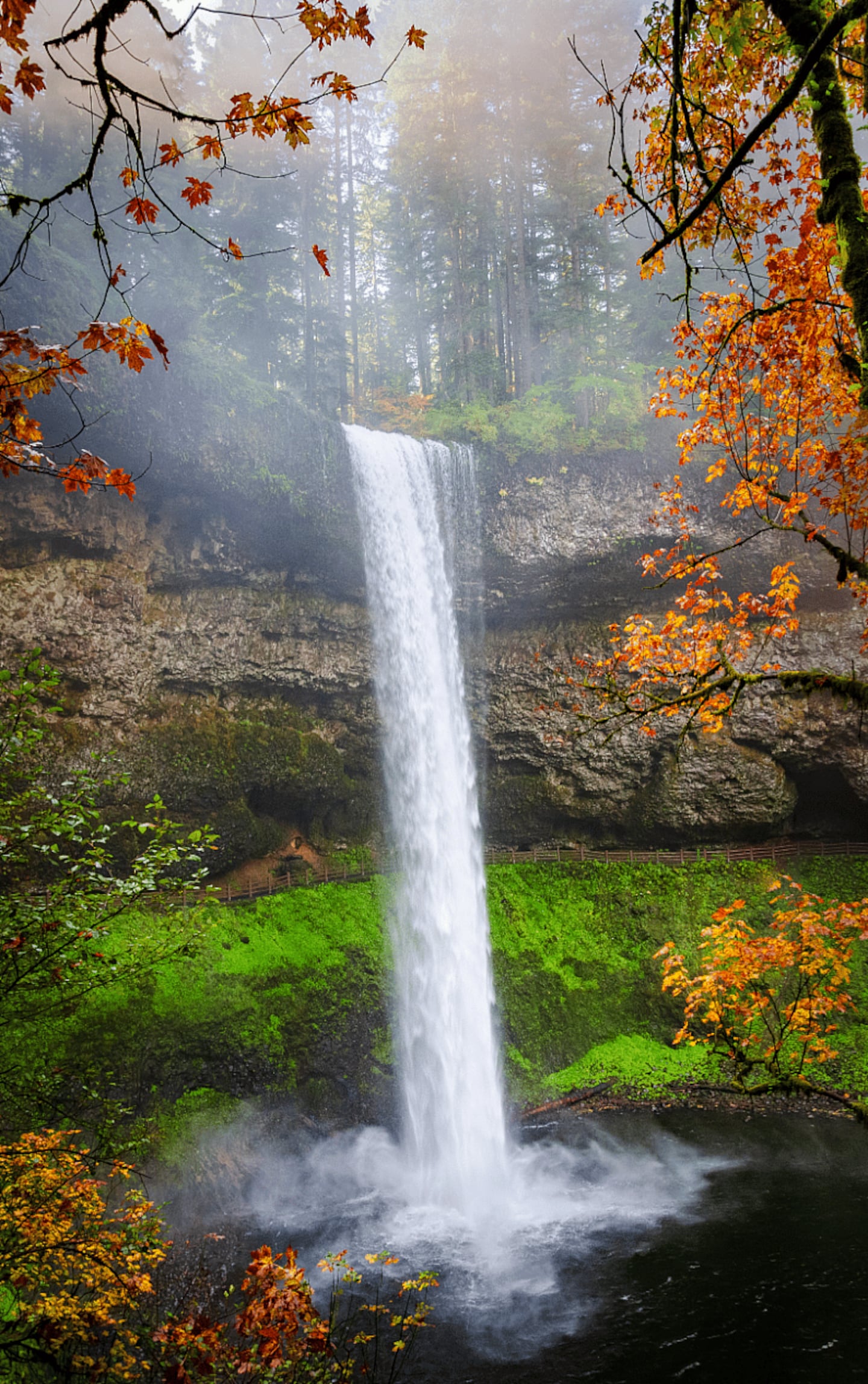
Silver Falls, Oregon
Silver Falls State Park is frequently called "the crown jewel" of Oregon's state parks system. Located in the green Cascade foothills east of Salem, the park contains a deep, twisting canyon that's been carved through basalt by the North Fork of Silver Creek. It also contains a series of stunning waterfalls, including 177-foot South Falls, where hikers can slip behind the cascade and into a huge natural rock amphitheater.
Around 1900, June Drake, a professional photographer, started a campaign to protect the area, which had been extensively logged. In 1926, Frank explained, “Oregon Senator Charles McNary reached out to the Park Service and said, ‘Hey, I think this is something kind of incredible. Please come out and see if this would become a national park.’ And the reason he turned it down was that he saw thousands of stumps that [he said] ‘from a distance looked like so many dark headstones.’” Several park proposals nationwide, Frank said, have failed because they didn’t fit the pristine image of what a park should look like.
Oregon made Silver Falls a state park in the 1930s. The idea for a national park was revived in 2008, but the bill died in committee.
Zack Frank
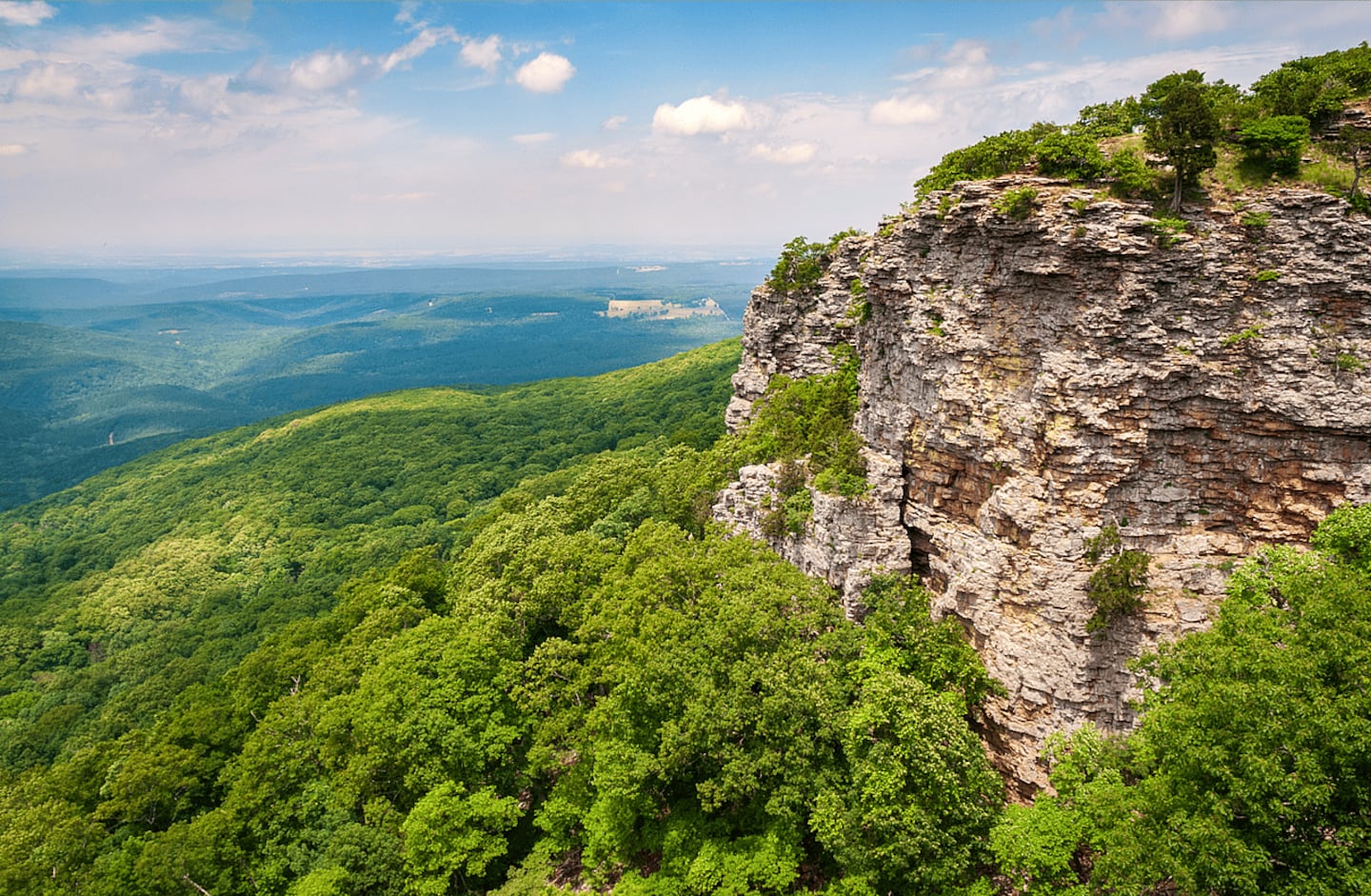
The Interior Highlands and Ouachita Mountains, Arkansas, Missouri, and Oklahoma
"No place on this list has ever come closer to becoming a national park than this one," Frank narrated in "Undiscovered America." Never heard of the Interior Highlands? You're not alone. And even fewer people visit these surprisingly rugged ridges and mountains, a piece of the Great Plains that has been raised up to a plateau, then deeply sliced by rainfall into a series of isolated ranges like the Ozarks and Ouachitas. Mount Magazine, at 2,753 feet, is Arkansas' highest point and offers views from its alpine meadows. The Talimena National Scenic Byway traces a ridge top of the Ouachita Mountains for 54 miles, granting views into two states. But mostly there's the solitude, Frank said.
So what happened? In the 1920s, Congress wanted to declare a 160,000-acre swatch of the Interior Highlands a national park. The park service sent staff to evaluate its value. One was Deputy Director Arno Cammerer, who inspected it for just half of a day. “It was very foggy, and he returned and he testified in front of Congress that it was not befitting a national park. But he barely saw the place,” said Frank. “And because of that, there was some opposition.” Even so, Congress passed the park bill. What happened next is unclear: On President Calvin Coolidge’s final day in office in 1929, he never signed the bill before him. It died and wasn’t taken up again. Today the highlands are a patchwork of state and federal lands and private inholdings, said Frank. “Trying to reassemble this place into a national park would take a concerted effort,” he said.
Lake Tahoe, California and Nevada
“Undiscovered America” doesn’t shy away from including some famous locations on its list of should-be parks. One is Lake Tahoe, the largest alpine lake in North America and, at 1,600 feet deep, the second-deepest lake in the country. Its famously clear water is ringed by tall peaks—and also a mix of casinos, ski resorts, second homes, and beloved spots like Emerald Bay State Park.
A Lake Tahoe National Park was proposed at least six times between 1897 and 1918, with two more efforts failing in 1930 and 1935, said Frank. The father of the movement was John Muir, who also pushed for national parks at Yosemite and Mount Shasta. "It got very, very close, in 1900," Zack said. But Nevada Senator William Stewart's 1899 bill, Frank explains in the film, "contained a land swap that the San Francisco Examiner exposed as a gift to lumber companies." The allegations of sweetheart deals torpedoed the deal. Today, the land surrounding the lake is a blend of state, federal, and private lands. Even so, argues Frank, "Unifying some of those public lands into one national park would effectively keep things the way they are."
Zack Frank
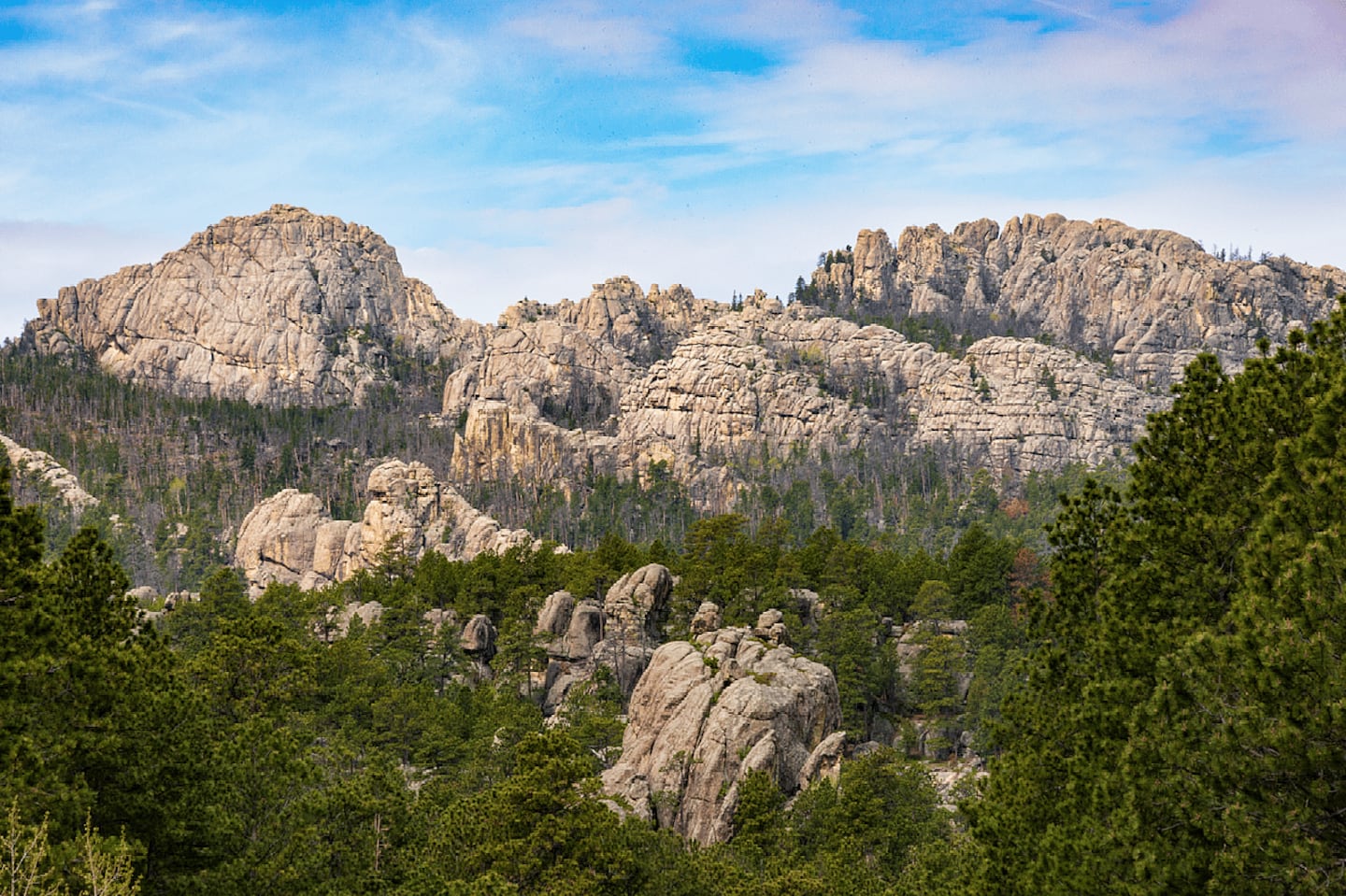
The Black Hills, South Dakota
The Black Hills rise suddenly from the Great Plains in western South Dakota, their peaks and ponderosa forests dark against the horizon. They contain wondrous variety, from needle-like pinnacles to green forests to cave systems that stretch hundreds of miles. And of course the area is home to Mount Rushmore and the Crazy Horse Memorial, the largest mountain carving underway anywhere.
“In 1939, a park service team unanimously backed a Black Hills National Park that would join Wind Cave and Custer State Parks,” according to Frank, “saying it could be ‘one of the most important in the system.’ A 1941 report recommended a 174,000-acre park. Local opposition shelved it in 1942.”
But that’s just the start of the complications. The Black Hills are central to the identity of the Lakota Sioux people. More than a century ago, the federal government broke a treaty and took the area. In 1980, the U.S. Supreme Court said the Sioux deserved monetary compensation.
The Sioux have rejected the payout, which with interest is now worth more than $1 billion. They want the Black Hills returned. And so atop other possible objections by others, Native Americans would have no reason to support more cooperation on a park until they can have their land back.
This story was produced by RE:PUBLIC and reviewed and distributed by Stacker.


